
Coming next month to Speakeasy Theatre is an experimental non-verbal puppetry performance, Scylla and Glaucus, the second production by the newly formed Lo-Key Theatre Company,. Kumnooh was curious and went to talk to director, artist and puppeteer Marika Els.
“I’ve been wanting to do this for 15 years,” she says. “The first attempt was in 2008 as part of my Master’s degree, but I got really ill and had to cancel. When Rob Appleby, Paul Glew and I started Lo-Key Theatre Company they asked what show I would like to do first. I said I know exactly – it’s written, it’s done, I have everything, I just need to build the set and the puppets. It’s finally happening.”
So who or what are Scylla and Glaucus? “It’s based on a myth from Ovid’s Metamorphoses – Scylla is a nymph and Glaucus a sea god. In this show there’s no talking; the story is told through the movement of puppets by myself and Sam Thomas, with music provided by Raven Norwood on violin. I have the outline of the story, what I want to happen where in each scene, but it will be a matter of improvisation to figure out how to portray emotions like sadness and longing, and the passing of time. The first few rehearsals will be all about improvising and getting to know the puppets.”
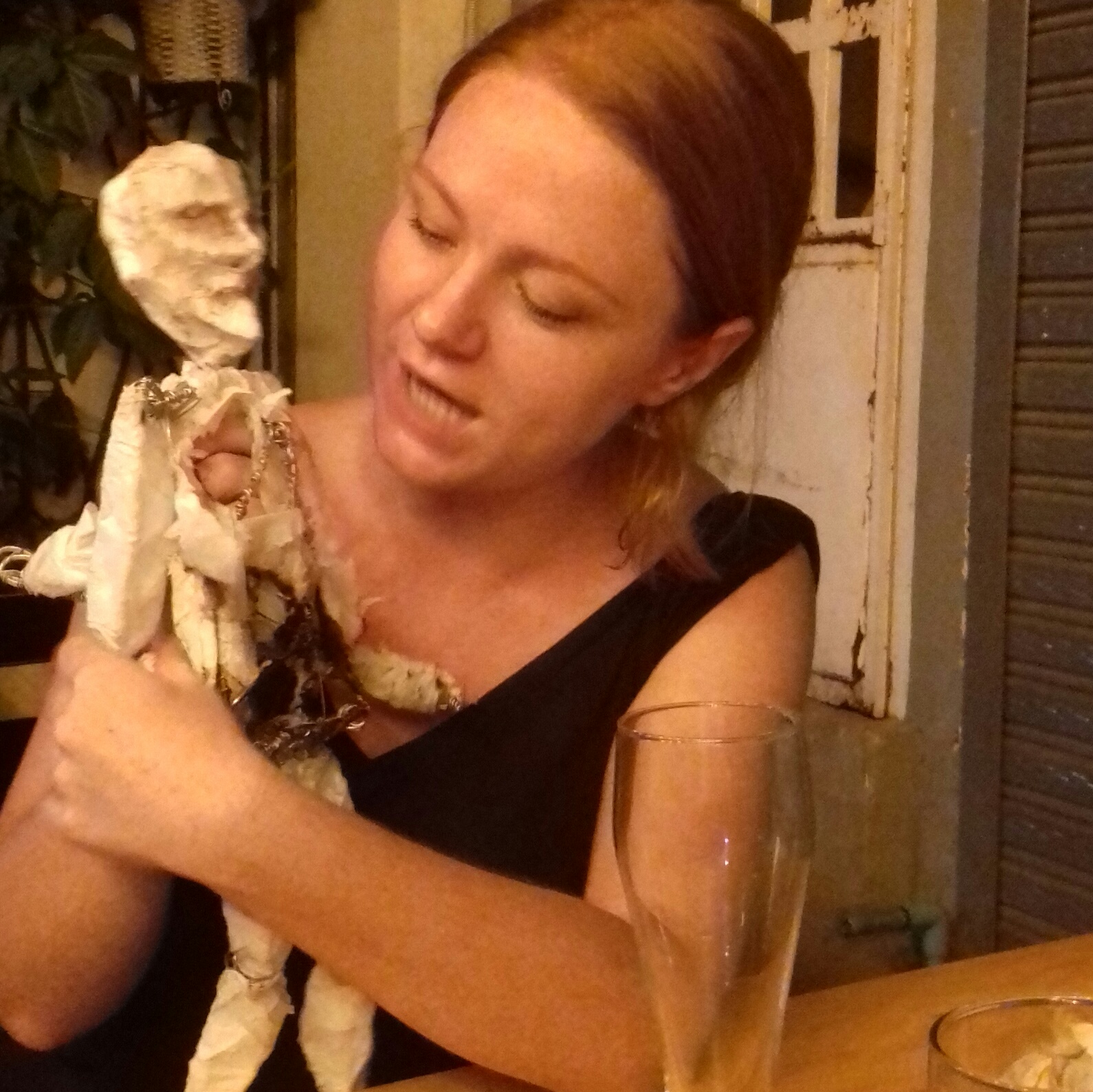
And why puppets? “Firstly, no one cares about puppets as much as I do. Puppets make me happy. I have a huge collection at home, one that I hope to grow. Right now life is basically caffeine, nicotine and puppets. And the occasional glass of wine. A little bit of puppet work, a little bit of set work. The construction of puppets is tedious, because of the wait. I use papier mache and papier mache pulp, so I have to wait for things to dry – it takes days to weeks to actually make something that is worth looking at. And I am in a bit of a rush, because I must finish the set and the puppets so we can start rehearsals.”

We also know you from visual art exhibitions in Phnom Penh. When did you first get involved in the arts? “I’ve been doing art – be it theatre or painting or drawing or sculpting or whatever – since I was very young. I did my first theatre competition when I was six years old. My parents, especially my father, encouraged this passion of mine, and always made sure I had art materials. I never took art as a subject in school, but I had private art classes through high school, and my teacher quickly realised that teaching me just a little bit of technique would suffice, because the rest just came instinctively. I’m a very instinctive creator, I don’t sit for hours and plan out things. When my brain doesn’t know what to do my hands can to it by themselves. It’s the same with the puppets that I’m doing now – when the brain runs out of ideas my hands just instinctively know what to do.
“I didn’t go to art school because I realised too late that I needed a portfolio to apply, and was too lazy to make one; I chose theatre instead. In my third year I chose acting and puppetry as specialisations. Puppetry was the perfect medium, it brought together my art and my acting. I had done puppetry a few times prior to actually studying it, but it never occurred to me that this is a thing that I should be doing. I did shows and I painted backdrops, did all kinds of things for a friend of my mum’s who did puppet shows. Now every time since then I go through an emotional upheaval and I feel a need to come back to me, to ground myself again, the first thing I reach for is puppets.”
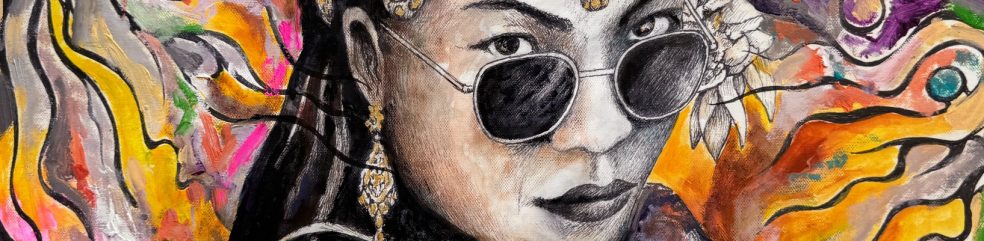
But the visual art is not far away. “My first show in Phnom Penh was at Cloud – And then I lost my mind, a solo exhibition. And then a while later I did My Portal, My Abyss with Emily Marques. I haven’t exhibited since, but I’ve been painting. At some point I should organise an exhibition again, because I’ve got way too many paintings, all hanging in my house, which is nice, but the only person enjoying them is me.
“My Portal, My Abyss delved a little bit into performance art; I came up with the idea of blind painting, where the artists are blindfolded, and all the tools, the paints, the brushes, random things like forks and sponges and chopsticks – whatever I could find, basically, that I thought would make interesting texture – are handed to the blindfolded artists by the audience, so it’s a collaboration. 20 minutes of painting and then a little break so the paint could dry, and then another 20 minutes of interacting.
“It’s not so much about the product for me, it’s more the process. I really want people to interact with art. One of my paintings is a little notebook that I papier mache’d onto a papier mache’d canvas – and at first glance it just looks like a 3D painting of an eye – I added a note: please interact with the artwork. Because it’s a notebook filled with sketches. I like things to be sensory – touch the art.”
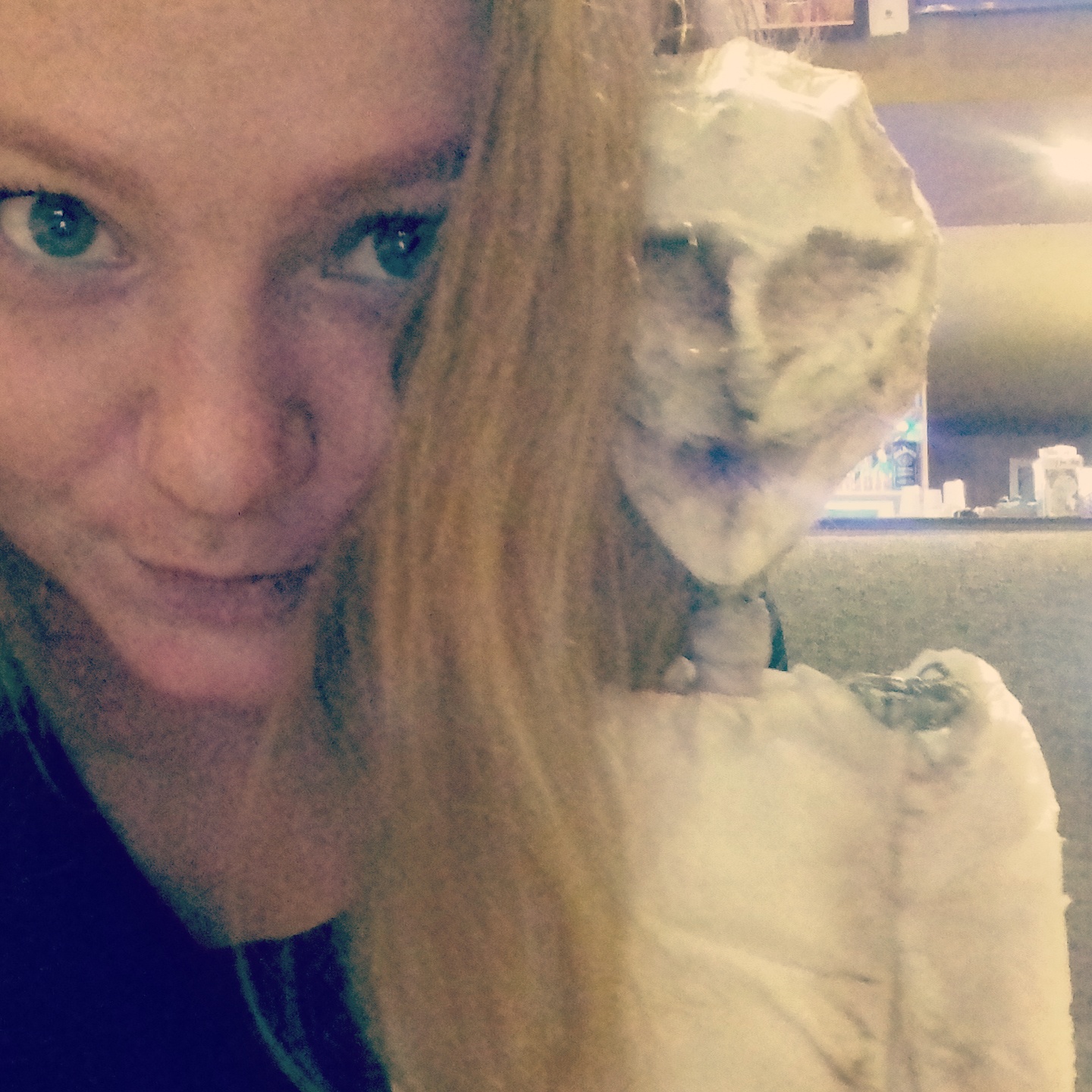
Marika got involved with long-running theatre troup Phnom Penh Players through a collaborative show called Life, Love and Other Illnesses. “One of the shows in it was called Andrea Rescued, which called for puppets. I built them out of wire and wet wipes. Initially we were wanting to set the puppets on fire, and of course the theatre said no. I was really disappointed. We did a test run and it looked so good! So we had to make a different design choice. I stuck to the wet wipes, just not dowsing them in alcohol, but made the skin not as strong, so that the actors could rip the skin off and expose the wire skeleton. They would destroy the puppets every night on stage and I would have to frantically fix them overnight. And for Scylla and Glaucus I’m recycling those puppets.
“Phnom Penh is a place where I’ve been able to experiment more with lower risk. I don’t want to play to an empty house, but it’s great to have the support of Paul and the Speakeasy Theatre to have a space for this sort of thing. Is everyone going to love it? Probably not. It’s a tragedy, not a rom com. So don’t see ‘puppet show’ and think Punch and Judy, or The Muppets, or Team America. I’m trying to give people something different.
“Puppets live in the land of magic, and they can do amazing things. Even though they have static features, the emotion they can convey can be so powerful. As much as the puppeteer gives life to the puppet the audience also brings it to life because they project onto it their thoughts, their emotions, their own experience.”
For those who are interested in exploring more, Marika is booked in for a Nerd Night presentation on 31 July on self-expression through puppetry.
And tickets are now available for Scylla and Glaucus, which will be performed on Friday 18 and Saturday 19 August, sponsored by the Kingdom of Wonder podcast.
Photos: supplied

 Kumnooh